Capital Readiness

Ready before the questions start.

Preparing companies for raising rounds or selling their business.

Sheet
03 of 08
Drawing
CR-03
Scale
1:1 with the data room
Revision
A · 2026
Why this is worth it

Think of it as the preparation an accelerator puts a company through, without sacrificing a piece of your equity or the money that you raise.

We take no equity or percentage of anything you raise. Your company is yours to keep.

DWG 03-0
SHT 03 / 08
Preparation
The Capital Practice

Where we support you.

An investor weighing a round and a buyer weighing an acquisition, a license, or a partnership ask many of the same questions. Capital Readiness is the work of having every one of those answers ready.

We build the data room the way a diligence team will read it, craft the story and the numbers behind it, and put your team through the hard version of the meeting until the difficult questions are easy. Nothing important gets discovered live. When the company is ready, we introduce it to the investors and buyers who told us they want to see businesses like it.

This runs as a complete program or as any part of it. Some companies want the whole thing, start to finish. Others already have the deck and the numbers and only want the data room built, or only want the team put through rehearsal before a meeting that is already on the calendar.

DWG 03-1

Data Room Creation

Read the way diligence reads it.
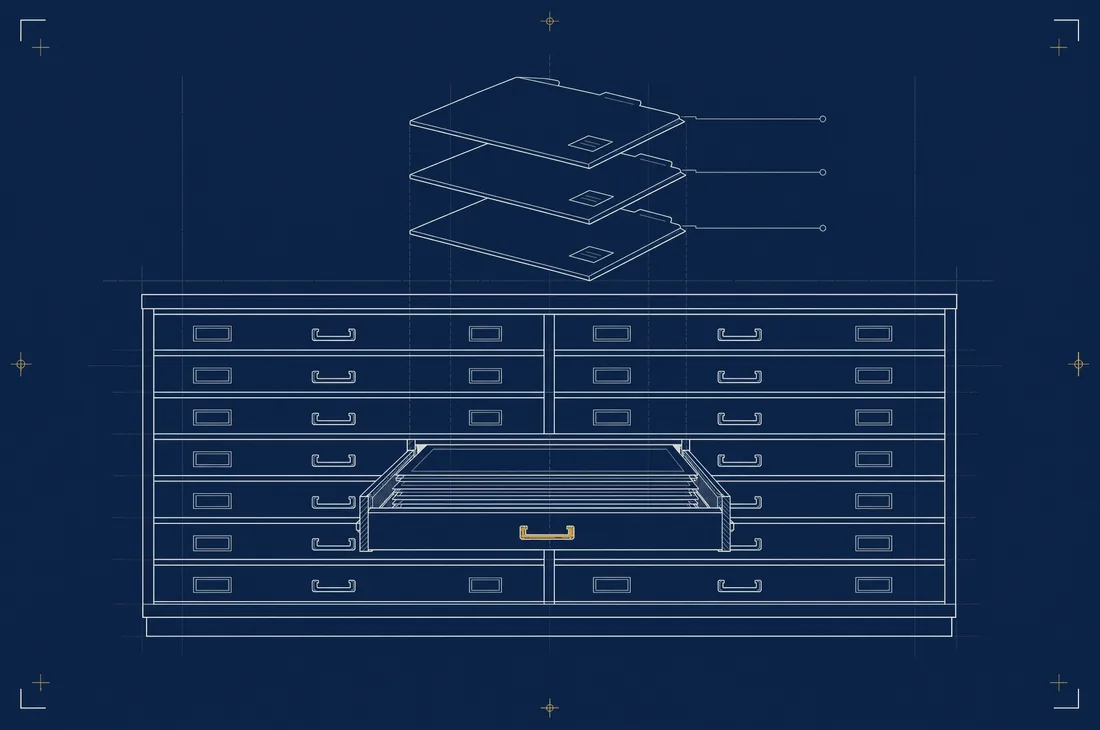
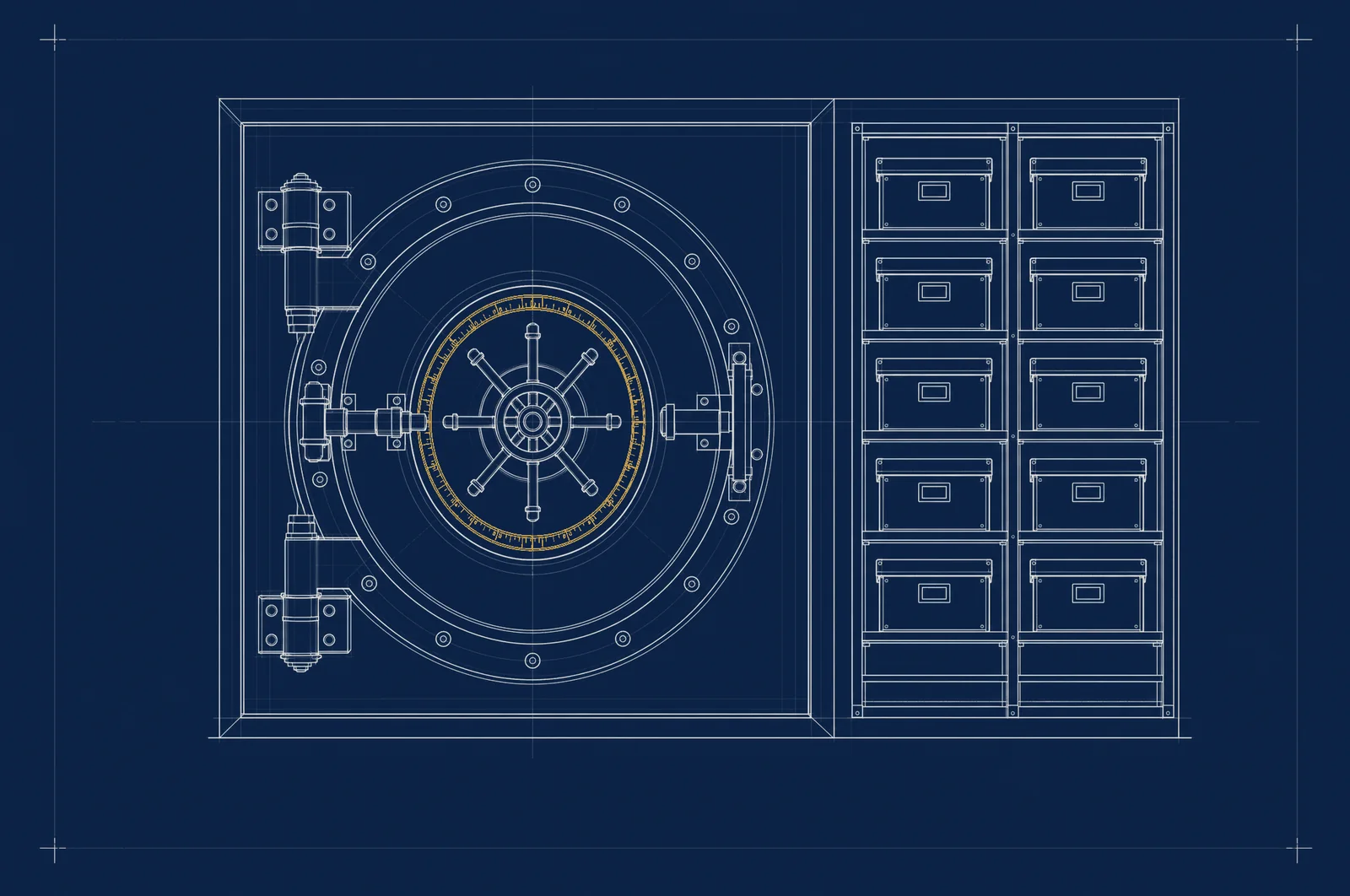
Drafting plate: a bank of flat file drawers in elevation with one drawer pulled out in section, and three labelled folders exploded above it.
DWG 03-1 · DetailNTS

We build the data room the way the people on the other side will read it: financials, contracts, metrics, cap table, and legal, all in order, internally consistent, and able to withstand scrutiny. Nothing inside it should raise a question the company cannot answer well.

Data rooms usually come apart on consistency. The revenue figure in the deck does not tie to the model, the model does not tie to the accounts, and the moment a reviewer finds one gap they start looking for others. We reconcile the numbers across every document before anyone outside sees them.

A data room that is complete, consistent, and easy to move through tells an investor the business is run by people who are ready, and that impression carries into every conversation that follows. Getting it wrong is one of the most damaging mistakes a company can make at this stage, because a single unexplained inconsistency is enough to reprice a deal or end it.

We build the data room alongside your finance and legal people, define every metric so the definitions hold up under questioning, and keep it current while the process runs. The same data room serves an investor evaluating a raise and a buyer evaluating a purchase, because both are looking for the same thing: whether the numbers are real and whether the company knows its own business.

We prepare the data room. We are not a party to the transaction it supports.

What this covers
  • Room structure and index, for investors or acquirers
  • Financial reconciliation across every document
  • Contract, cap table, and corporate record assembly
  • Metric definitions that hold up under questioning
  • Upkeep of the data room while the process runs
DWG 03-2

Creating the Narrative

The story before the slides.

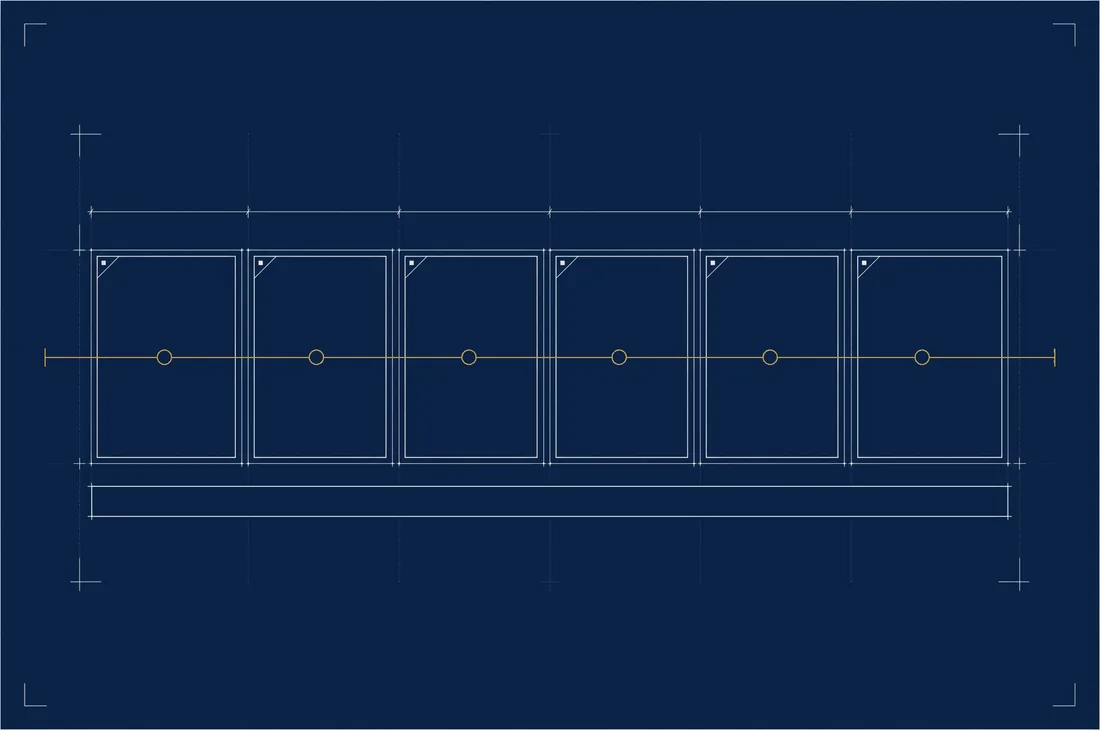
Drafting plate: a strip of six empty framed panels in a row, joined by a single continuous line running through all of them.
DWG 03-2 · DetailNTS

Before a deck exists, the company needs a story that holds together: what this business is, why it wins, why now, and what the money is for. We build that argument out of the facts.

We go through the company's history, its numbers, its market, and its plan, and shape them into a narrative a stranger can follow. The strongest fact is often buried somewhere in the detail, and finding it is part of the work.

Where the story has a genuine weakness, we address it inside the narrative before a reviewer finds it. A weakness the company raises first reads as candor.

The output is the story itself, the proof that supports it, and the materials that carry it: the deck, the model, and whatever else the conversation calls for. We keep rebuilding those materials as the story sharpens.

What this covers
  • Core investment or acquisition narrative
  • Positioning of the numbers and the plan
  • Proof points and supporting evidence
  • The deck, the model, and supporting materials
DWG 03-3

Pitch Coaching & Refinement

Rehearsed until it holds under pressure.

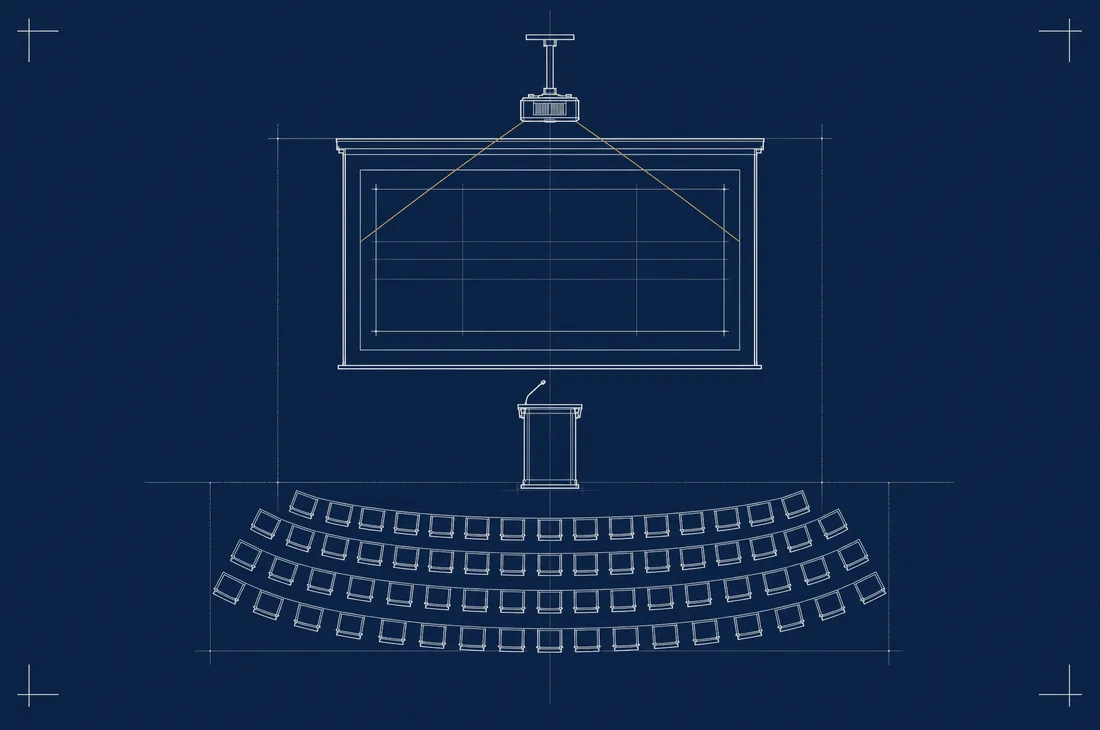
Drafting plate: a lectern facing a blank projection screen, with curved seating rows drawn in plan in the foreground and a ceiling projector above.
DWG 03-3 · DetailNTS

Once the story exists, this is where it is tightened and tested. We work through the pitch pass by pass: what to cut, what to lead with, how long each section runs, and where an interruption would throw the whole thing off.

Then we prepare the people who have to deliver it. We bring in generalist and specialist investors and mentors from the firm's network to sit on the other side of the table and ask what they would ask, with no reason to go easy on anyone.

The questions that would have derailed a live meeting get asked while the stakes are still zero, and the team hears them from someone whose day job is asking them. We also settle who answers what, since a founder fielding every question is its own kind of warning sign.

Confidence in that meeting comes from preparation, and the people across the table can tell.

What this covers
  • Pitch structure, timing, and delivery
  • Mock sessions with outside investors and mentors
  • Question bank and prepared answers
  • Handling interruptions and hostile questioning
  • Role assignment across the team
DWG 03-4

Negotiation Training & Diligence Prep

Get ahead of what they will find.

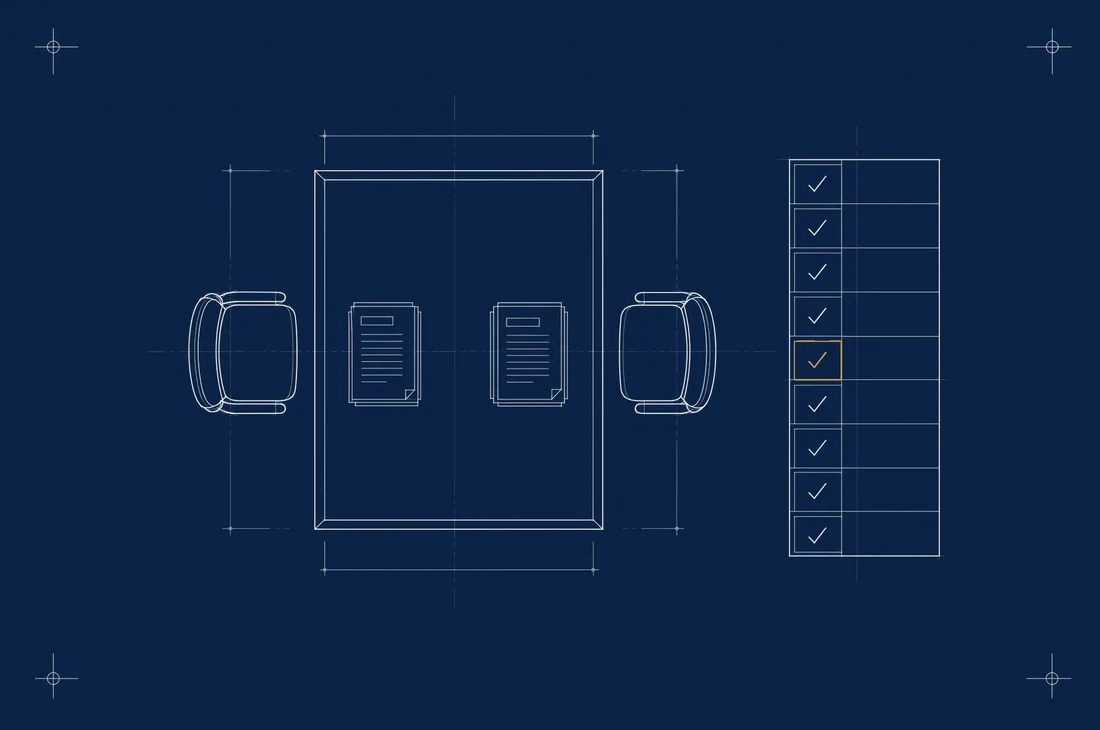
Drafting plate: a table in plan with two seats facing each other across it, document stacks at each side, and a checklist grid drawn alongside.
DWG 03-4 · DetailNTS

Most founders negotiate a deal like this once or twice in a career. The people across the table do it every week, and that asymmetry is where value gets lost. This work exists to close it.

We train your team on how these conversations are run: what is genuinely negotiable and what is not, where your leverage sits and when it is strongest, how the terms beyond price shape what you are left with, and how to hold a position under pressure. We rehearse the hard turns until your team can take them without conceding ground it did not mean to give.

Leverage in that conversation is decided earlier, in diligence. Deals slow down and die there, and almost always over something that could have been prepared for. Whether it is an investor's diligence or a buyer's, we run the process the counterparty will run, before they do, and get ahead of what it turns up.

That means going through the company the way an unfriendly reviewer would: customer concentration, contract terms, churn definitions, key-person exposure, unresolved legal matters, and the gap between what the model assumes and what the business has demonstrated. Weak spots get fixed, or explained on the company's own terms, before anyone else finds them. A known issue with a considered answer stays a negotiating point. Found by the other side, it becomes a reason to reprice or walk.

We prepare your team to sit in that negotiation well. We do not sit in it for you, we do not negotiate on your behalf, and we are not a party to the transaction.

What this covers
  • Negotiation coaching for the team
  • Leverage, terms, and what to concede beyond price
  • Rehearsal against a hostile counterparty
  • Mock diligence run against the company
  • Issue list with recommended fixes
  • Prepared positions on known weaknesses
  • Response readiness while the process is live
DWG 03-5

Targeted Introductions

Lined up long before you need them.

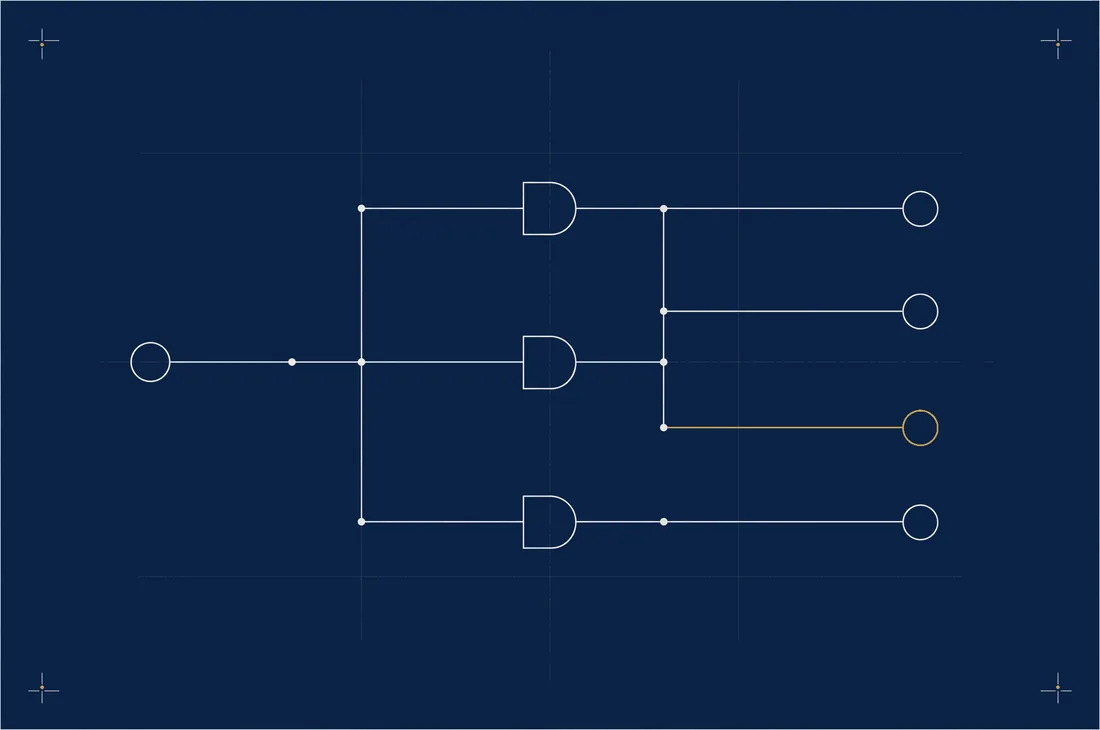
Drafting plate: one node at the left routed through three gate symbols and fanning out to four matched nodes at the right.
DWG 03-5 · DetailNTS

The introduction itself comes at the end, when the company is genuinely ready. The work behind it starts much earlier.

While the rest of the process is underway, we are already reaching out privately across the firm's global investor network, describing the profile of what is coming and finding out who wants to see it. That happens discreetly, and without the company's name attached until there is a reason to use it.

By the time the materials are finished and the team is prepared, the interest is mapped and the meetings are lined up. The company walks in front of the right people at the moment it is ready for them, instead of starting the search from zero once the preparation is done. That timing is the difference between a raise that takes six weeks and one that drags for two quarters.

We make those introductions ourselves, and only to people who told us they want to see companies like this one. From there both sides take the conversation forward. We are not a broker and we do not run the deal; our part is to make sure that when the right people meet, the company is prepared and the fit is real.

What this covers
  • Private outreach across the firm's global network while preparation runs
  • Matching against stated investor and buyer appetite
  • Direct introductions from the firm once the company is ready
  • Briefing on both sides before the meeting
The Other Practice
SHT 03 / 08
Companion
The Other Practice

Growth Execution.

Capital and growth are the same discussion. Capital exists to fund growth, and what an investor or a buyer is evaluating is the business that growth is being built in.

Growth Execution is the side of the firm that goes inside it: opening a market, launching a product, rebuilding pricing and the sales engine, and signing the partnerships that create distribution.

An empty boardroom set for a meeting.
Before the questions start

The room is easier when the work is already done.

Data room · narrative · rehearsal · introductions

DWG 03-6 · Start here

Tell us what is in the way.

The first conversation is simple: where the business is stuck, what you have already tried, and what you want your company's next year to look like.

Start the Conversation hello@chestertonhills.com

Thirty minutes. No deck required.